
-
Structured Coordination for a High-Stakes Caribbean Port Transition Project
- August 27, 2026
- Posted by: Altus Regional Team
- Categories: General, Maritime & Blue Economy, Project Insights
No Comments
A practice‑based look at how Altus Regional supported the coordination of a high‑stakes Caribbean port transition, distilling the lessons learned, practical approaches, and governance practices that helped maintain alignment and operational continuity during a critical period.
-
From Policy to Practice: A Practical Framework for Maritime Policy Implementation
- August 21, 2026
- Posted by: Natalie O. Sandiford, CAMS, LEC, LLM, MSc
- Categories: Maritime & Blue Economy, Policy to Practice
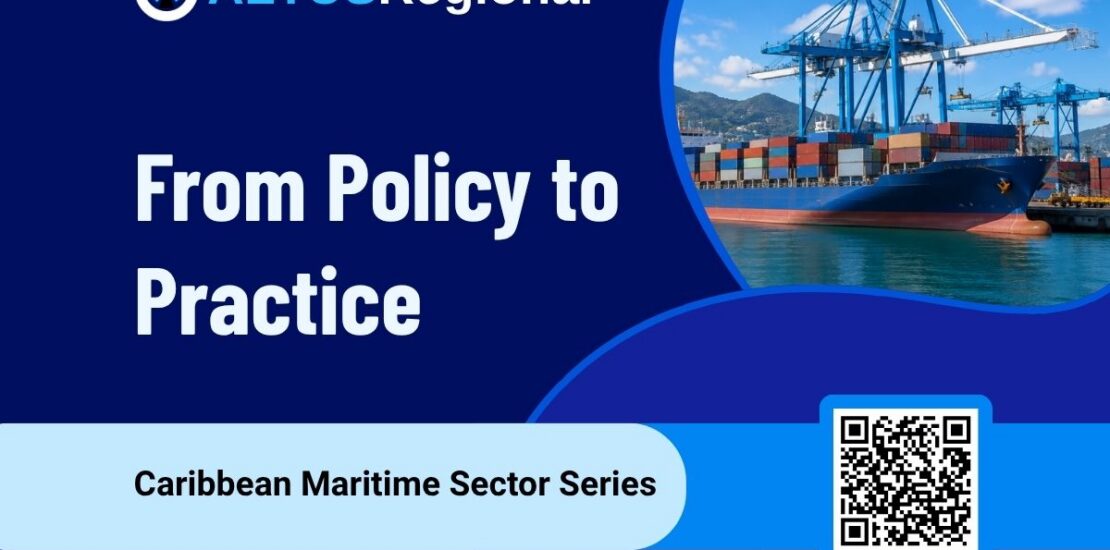
A practice‑driven framework for moving from policy intent to effective implementation across the maritime sector. This article introduces the Maritime Policy Implementation Framework, offering a structured approach for effectively moving from policy to practice in the maritime sector.
-
Marine Spatial Planning for Blue Economy Investment
- July 1, 2026
- Posted by: Amaya Emmanuel
- Categories: Blue Policy Series Insights, Maritime & Blue Economy

This article explains how Marine Spatial Planning (MSP) is becoming a key digital governance approach for managing ocean space in the blue economy. It highlights how GIS-based tools are used to coordinate competing marine activities, reduce regulatory conflict, and support more sustainable and investment-ready ocean development through integrated, data-driven planning.
-
Digital Tools Transforming Environmental Monitoring and Pollution Detection in the Caribbean
- June 30, 2026
- Posted by: Ariel Miller
- Categories: Digital Transformation Trends Insights, Maritime & Blue Economy

Digital tools are reshaping environmental monitoring and pollution detection across the Caribbean. This article outlines how sensors, satellite imaging, and integrated data platforms are being used to track environmental conditions in real time and improve early warning capabilities.
-
Strengthening Labour Standards for Workers in the Blue Economy
- June 30, 2026
- Posted by: Amaya Emmanuel
- Categories: Blue Policy Series Insights, Maritime & Blue Economy
This article explains how the Maritime Labour Convention (MLC, 2006) and the ILO Work in Fishing Convention (No. 188) establish international standards for decent work at sea, while also highlighting ongoing gaps in enforcement and implementation.
-
Marine Pollution Response and Waste Management Gaps in the Caribbean
- May 30, 2026
- Posted by: Amaya Emmanuel
- Categories: Blue Policy Series Insights, Maritime & Blue Economy
Ports and cruise terminals are increasingly exposed to rising sea levels, stronger storms, and coastal erosion, making outdated design standards no longer sufficient. Climate resilience must shift from optional guidance to mandatory rules embedded in design, maintenance, and investment frameworks. Without enforceable standards, critical maritime infrastructure risks becoming unsafe, uninsurable, and economically unsustainable over its lifespan.
-
Climate Adaptation Across the Caribbean Maritime Sector
- May 25, 2026
- Posted by: Ariel Miller
- Categories: Digital Transformation Trends Insights, Maritime & Blue Economy
Caribbean ports are increasingly transforming their infrastructure and operations to respond to growing climate risks such as hurricanes, sea-level rise, and coastal erosion. The article explores how ports are adopting adaptive engineering, digital technologies, renewable energy systems, and nature-based solutions to improve resilience and maintain critical supply chains.
-
From Policy to Practice: Advancing Gender Equality for Maritime Excellence
- May 5, 2026
- Posted by: Natalie O. Sandiford, CAMS, LEC, LLM, MSc
- Categories: Maritime & Blue Economy, Policy to Practice
For International Day for Women in Maritime 2026, the International Maritime Organization (IMO) has adopted the theme “From Policy to Practice: Advancing Gender Equality for Maritime Excellence,” signalling a clear focus on strengthening the systems, structures, and institutional capabilities required to advance gender equality across the global maritime sector. The maritime sector must now strengthen the frameworks, systems, and structures that advance gender equality, underpinned by sector‑specific international instruments and stronger national direction to sustain maritime excellence.
-
Key Insights from the Webinar on Ports and Communities: Toward a Balanced Port–City Relationship
- April 17, 2026
- Posted by: Ariel Miller
- Categories: Digital Transformation Trends Insights, Maritime & Blue Economy
Discover how ports and communities can build sustainable relationships that foster economic growth and well-being. In a recent webinar hosted by the Inter-American Committee on Ports (CIP-OAS), experts from Manta Port Terminal, Haina International Terminals, and Port of Antofagasta shared strategies for integrating port operations with community needs.
-
Ports, Terminals and Coastal Infrastructure at the Frontline of a Changing Climate
- April 4, 2026
- Posted by: Amaya Emmanuel
- Categories: Blue Policy Series Insights, Maritime & Blue Economy
Climate resilience standards are essential for safeguarding ports, cruise terminals, and coastal infrastructure against rising sea levels, hurricanes, and extreme weather. By integrating global best practices, mandatory design requirements, and nature-based solutions, these standards strengthen maritime assets, protect tourism economies, and ensure supply chain continuity in vulnerable coastal regions.
-
Smart Ports for Zero‑Waste Operations
- March 20, 2026
- Posted by: Ariel Miller
- Categories: Digital Transformation Trends Insights, Maritime & Blue Economy
Smart ports for zero-waste operations integrate digital tools, renewable energy, and circular systems to eliminate waste, enhance efficiency, and strengthen sustainable maritime infrastructure across the Caribbean.
-
Digital Innovation in Oil Spill Detection in the Caribbean
- March 20, 2026
- Posted by: Ariel Miller
- Categories: Digital Transformation Trends Insights, Maritime & Blue Economy
Emerging digital technologies are reshaping how oil spills are detected and managed across the Caribbean. From satellite monitoring and drones to AI-powered analytics, these tools are helping authorities respond faster, reduce environmental damage, and strengthen regional preparedness.
-
Toward a Circular Blue Economy: Reducing Waste in Caribbean Maritime, Fisheries, and Coastal Tourism Industries
- March 7, 2026
- Posted by: Amaya Emmanuel
- Categories: Blue Policy Series Insights, Maritime & Blue Economy
Integrating the principles of a circular economy into Caribbean maritime operations, fisheries management, and sustainable tourism development practices.
-
Closing Legislative and Governance Gaps in Marine Ecosystem Protection Across the Caribbean
- February 23, 2026
- Posted by: Amaya Emmanuel
- Categories: Blue Policy Series Insights, Maritime & Blue Economy
Examines why modern, integrated laws and stronger institutional coordination are essential to safeguard marine ecosystems from accelerating environmental pressures.
-
Strengthening Coral Reef, Mangrove and Seagrass Protections in the Caribbean
- February 22, 2026
- Posted by: Amaya Emmanuel
- Categories: Blue Policy Series Insights, Maritime & Blue Economy
Analysis of emerging threats to coral reefs, mangroves and seagrass meadows in the Caribbean and the governance reforms needed to strengthen coastal ecosystem protections.
- 1
- 2