Marine Pollution Response and Waste Management Gaps in the Caribbean

Introduction: Marine Pollution as a Growing Governance and Resilience Challenge

Marine pollution has emerged as one of the defining governance and environmental resilience challenges facing the Caribbean. While climate change, coastal erosion and biodiversity degradation continue to attract policy attention, recent oil spill incidents across the region have exposed a deeper structural weakness: many Caribbean states remain inadequately prepared legally, institutionally and financially to respond rapidly and effectively to large-scale marine pollution events. The consequences extend beyond environmental damage. Oil spills threaten tourism-dependent economies, fisheries, public health, food security, maritime trade, coastal infrastructure and long-term ecosystem resilience. The policy challenge is therefore no longer confined to spill response itself, but to whether Caribbean legislation adequately mandates preparedness, allocates liability, secures cleanup financing and creates enforceable accountability mechanisms before disasters occur.

Gender Mapping Exercise

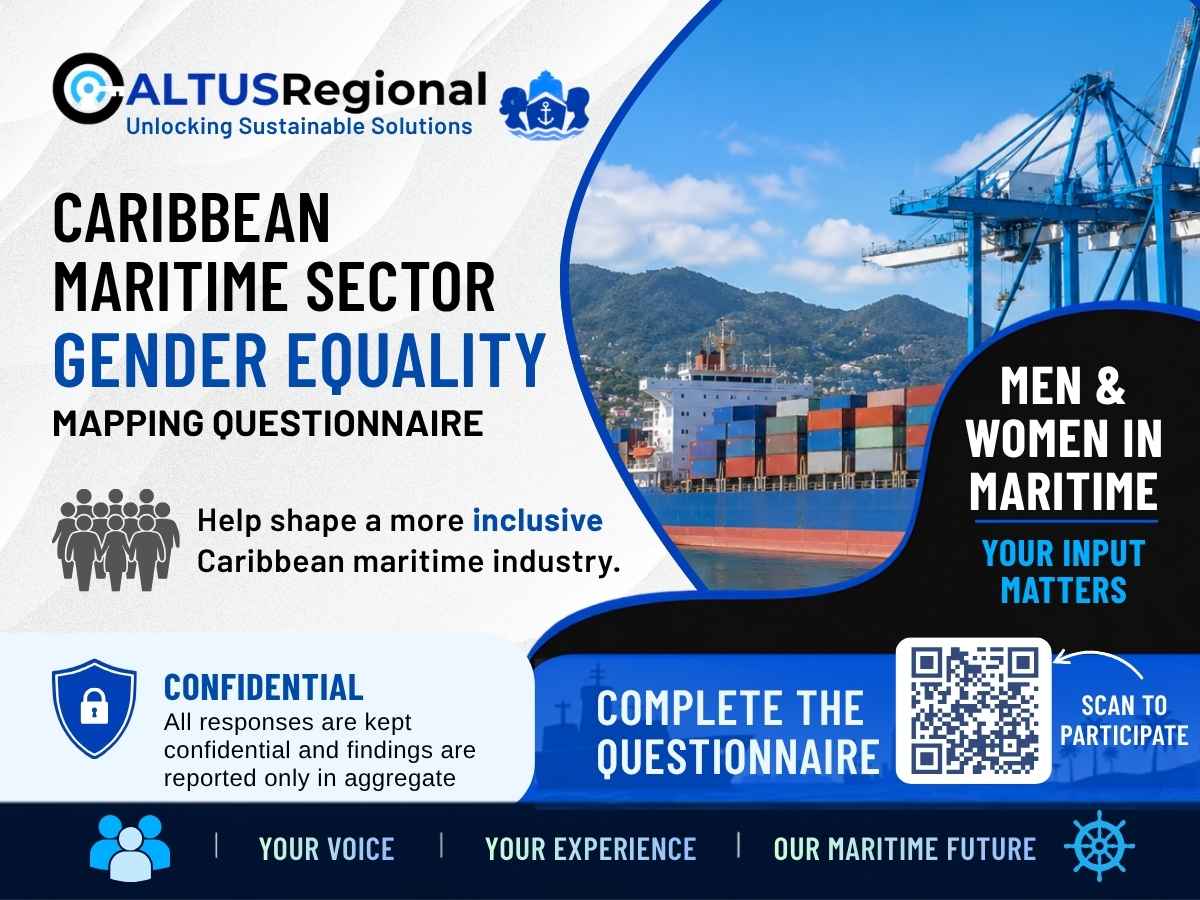
Altus Regional is conducting a regional Gender Equality Mapping Exercise to understand how Caribbean maritime institutions are progressing from policy commitments to real implementation. The mapping exercise is designed to assess whether institutions possess the policies and systems required to support gender‑equality implementation as part of their operational effectiveness. Your participation will help build the evidence base needed to enhance gender‑responsive governance across the Caribbean maritime sector.

Respond to the Questionnaire

The Tobago Oil Spill: A Regional Wake-Up Call

The February 2024 Tobago oil spill became one of the clearest demonstrations of these vulnerabilities. A capsized barge carrying fuel oil off Tobago’s coast resulted in extensive contamination of Tobago’s shoreline and eventually affected the waters and coastlines of Bonaire, with concerns also extending to Grenada and Aruba. The incident triggered a national emergency in Trinidad and Tobago and exposed the transboundary nature of marine pollution within the Wider Caribbean Region. Reports indicated that emergency responders struggled initially to contain the spill, while uncertainty persisted regarding the vessel’s ownership, the quantity of oil released and ultimate financial responsibility for cleanup and restoration.
 
The spill demonstrated several systemic weaknesses common throughout the region. First, many Caribbean states continue to rely heavily on fragmented contingency planning frameworks that lack operational integration, modern equipment capacity and stable financing mechanisms. Second, regional coordination often depends on ad hoc cooperation rather than legally embedded mutual assistance systems with pre-agreed funding and command structures. Third, liability frameworks remain insufficiently robust where vessels are uninsured, improperly registered, abandoned or operating through opaque ownership structures. Finally, environmental remediation and long-term ecosystem restoration funding mechanisms are frequently absent or underdeveloped, leaving governments and affected communities to absorb significant economic losses.
 
The regional implications of the Tobago spill were particularly significant because oil pollution did not remain confined within national waters. Oil contamination reached Bonaire’s sensitive mangrove systems, coral habitats and tourist beaches despite mitigation efforts. Authorities in Aruba activated emergency monitoring and preparedness measures amid concerns that the spill could spread further across the Dutch Caribbean. The incident reinforced a reality that Caribbean marine pollution cannot be addressed solely through national legislation. Ocean currents, interconnected ecosystems and regional shipping routes mean that marine pollution events rapidly become cross-border governance issues requiring harmonised legal and operational frameworks.

International Legal Frameworks and Persistent Implementation Gaps

Many Caribbean states are parties to the International Convention on Oil Pollution Preparedness, Response and Co-operation (OPRC Convention), MARPOL and the Cartagena Convention for the Protection and Development of the Marine Environment of the Wider Caribbean Region. These frameworks establish broad obligations relating to pollution prevention, contingency planning and regional cooperation. However, implementation gaps remain substantial. The UNEP Cartagena Convention Secretariat has repeatedly emphasised the need for stronger legal and institutional frameworks to address marine pollution and oil spill preparedness in the region. Yet in practice, national implementation often remains uneven, underfunded and operationally weak.

A recurring problem throughout the Caribbean is that oil spill contingency planning frequently exists as a technical document rather than a fully operational legal and financial system. Existing contingency plans often identify agencies and reporting lines but fail to create enforceable obligations relating to funding, equipment stockpiles, training, scenario exercises, independent audits and minimum response capability standards. Trinidad and Tobago’s National Oil Spill Contingency Plan itself recognises alignment with broader Caribbean regional planning frameworks, but the Tobago incident nevertheless demonstrated how quickly operational capacity can become overwhelmed during a major event.

Moving from Reactive Response to Mandatory Preparedness

The governance problem is compounded by chronic underinvestment in preparedness. Regional oil spill preparedness guidance has long warned that governments frequently allocate insufficient funding to pollution response systems because such investment is politically deprioritised until a disaster occurs. This creates a reactive rather than preventive governance culture, where states rely heavily on external assistance, private sector intervention or international aid after spills occur. Such an approach is economically irrational. Delayed containment and cleanup significantly increase remediation costs, ecological damage and economic disruption, particularly in tourism-dependent coastal economies.
 
Caribbean legislation must therefore evolve beyond broad environmental protection provisions toward mandatory preparedness and resilience obligations. First, legislation should require all ports, offshore operators, bunkering facilities, cruise terminals, fuel storage operators and high-risk maritime activities to maintain certified pollution response plans linked to minimum equipment and response capability requirements. These obligations should not be voluntary guidance standards; they should form part of licensing and operational approval conditions subject to regulatory inspection and enforcement.

Establishing Sustainable Funding for Marine Pollution Response

Second, legislation should establish mandatory national marine pollution response funds financed through a combination of industry levies, port fees, shipping contributions, offshore operator assessments and environmental risk charges. One of the clearest lessons from recent oil spill events is that uncertainty over cleanup financing delays response effectiveness. Cleanup and restoration cannot depend on whether responsible parties can be identified quickly or possess sufficient financial resources. Dedicated contingency funds are therefore essential to ensure immediate mobilisation capacity while liability determinations proceed separately.

Strengthening Liability and Financial Assurance Frameworks

Third, Caribbean states should strengthen liability legislation to address modern maritime realities, including abandoned vessels, opaque ownership structures and transboundary pollution impacts. Recent incidents revealed the difficulties governments face when vessel ownership, insurance status or operational responsibility are unclear. Legislation should therefore require mandatory pollution liability insurance, proof of financial assurance for high-risk maritime operations and expanded powers enabling governments to recover cleanup and restoration costs directly from insurers, operators, charterers and beneficial owners where appropriate.

Embedding Long-Term Environmental Restoration into Legislation

Fourth, legislation must explicitly include long-term environmental remediation and livelihood restoration obligations rather than focusing solely on immediate containment and cleanup. Oil spill impacts on mangroves, fisheries, coral reefs and coastal tourism may persist for years after visible cleanup activities conclude. Reports following the Tobago spill suggested that ecological restoration in affected areas could require several years. Yet many legal frameworks remain narrowly focused on emergency response rather than ecosystem recovery, biodiversity restoration and compensation for affected coastal communities.

Closing the Waste Management Gap in Marine Pollution Response

Waste management also remains a critical but under-addressed dimension of marine pollution governance. Oil spills generate large volumes of contaminated waste including oil-water mixtures, contaminated sand, protective equipment, damaged fishing gear and hazardous debris. Many Caribbean states lack dedicated hazardous marine waste treatment and disposal infrastructure capable of handling large-scale pollution events safely. Without clear legislative requirements governing temporary storage, transport, treatment and disposal of contaminated material, secondary environmental contamination risks emerge during cleanup operations themselves.

Enhancing Regional Cooperation Through Harmonised Legal Frameworks

Regional coordination mechanisms must also be strengthened through law rather than informal cooperation alone. The Caribbean Regional Contingency Plan provides an important framework for regional coordination, but recent events demonstrate the need for more formalised mutual assistance arrangements, interoperable command systems, shared equipment inventories and standardised response protocols across jurisdictions. Given the transboundary nature of marine pollution, no Caribbean state can realistically maintain all required response capabilities independently. Legislative harmonisation and regional burden-sharing are therefore essential components of effective resilience.

Marine Pollution Preparedness as an Economic and National Security Priority

The broader lesson from recent Caribbean oil spill events is that marine pollution preparedness is not merely an environmental issue; it is an economic resilience, fiscal stability and national security issue. Ports, tourism infrastructure, fisheries and coastal communities are increasingly exposed to both operational pollution risks and climate-amplified maritime hazards. As shipping traffic, offshore energy activity and coastal development expand throughout the region, the probability of future marine pollution incidents will increase correspondingly.

Conclusion: Building a Resilient Legislative Framework for Marine Pollution Preparedness

The policy direction required is therefore increasingly clear. Caribbean legislation must transition from reactive environmental management toward integrated marine resilience governance. This requires mandatory preparedness standards, enforceable response obligations, dedicated cleanup financing mechanisms, strengthened liability frameworks, regional coordination systems, hazardous waste management infrastructure and legally embedded restoration obligations. The cost of preparedness may appear significant, but the cost of legislative and institutional inadequacy is substantially greater. The Tobago spill and its regional impacts demonstrated that marine pollution in the Caribbean is no longer a hypothetical future risk; it is a present governance reality requiring urgent legal and policy reform.

Request Advisory Support

If your organisation is working to strengthen its gender‑equality policies and implementation systems, Altus Regional can help. Contact us to learn how our policy development, training, and institutional support services can advance your goals.

Discover How We Can Help

Request Our Services

Recent Articles

How can we help you?

Submit an inquiry online.

Our Services

Altus Regional is a multidisciplinary consulting firm delivering integrated advisory, technical, modernization, training, capacity‑building, and project‑delivery services across a wide range of sectors.

Research, Insights & Analytics

Independent research, insights, and data analytics supporting maritime, blue economy, agriculture, environmental resilience, and regulatory reform in the Caribbean.

Regulatory Compliance Audit Readiness

Regulatory Compliance & Audit Readiness services supporting maritime administrations, ports, financial institutions, and regulated entities in meeting international standards and reporting obligations.

Market Entry Strategy

Altus Regional provides structured market entry support for international brands entering the Caribbean, helping companies navigate regulatory requirements and multi‑jurisdictional frameworks with clarity and confidence.

Policy Development & Program Implementation

Policy development and implementation services supporting clear objectives, practical execution frameworks, stakeholder engagement, and measurable outcomes.

Project Delivery Solutions

Project delivery and implementation services supporting ports, logistics, climate, and agricultural programmes through embedded leadership, coordination, management, and governance oversight.

Creative Design Solutions

Creative design solutions that help organisations of all sizes communicate with clarity, personality and purpose through thoughtful visual and digital design.

Training & Capacity Building

Altus Regional delivers targeted training and capacity building aligned with sector requirements, regulatory frameworks, and operational needs.

Technical Services

Altus Regional provides technical services that support planning, delivery, and operational decision‑making across infrastructure, environmental systems, natural resources, and climate‑related initiatives.

Digital Transformation & Data‑Driven Solutions

Digital Transformation & Data‑Driven Solutions supporting Caribbean maritime administrations, ports, financial institutions, and regulated entities through practical, fit‑for‑purpose digital solutions.

Marketing & Communications

Altus Regional delivers tailored marketing and communications solutions that strengthen institutional positioning and stakeholder trust across public, private, and regulated sectors.

Our Areas of Focus Sectors We Serve

Altus Regional works across sectors where governance, regulation, and operational complexity intersect, unlocking sustainable solutions specifically tailored to address the unique realities of the Caribbean.

Upcoming Events Learning Events, Training & Capacity Building Initiatives, and Thought Leadership

Gain insights on industry trends, register for our upcoming webinars and workshops, and follow our thought leadership platforms.

Thought Leadership

Webinars & Workshops

Implementing a Risk-Based Approach Workshop
  • June 27, 2025
  • One Day Workshop
  • ONLINE

Our Service Divisions

Our service divisions reflect specialised capability aligned with specific sectors, addressing the distinct needs and challenges of the industries we serve.


Unlocking Sustainable Solutions