Closing Legislative and Governance Gaps in Marine Ecosystem Protection Across the Caribbean

Caribbean marine ecosystems are increasingly affected by pressures that were not anticipated when most national environmental and coastal statutes were drafted several decades ago. This reality underscores the urgent need to strengthen coral reef, mangrove, and seagrass protections, given their central role in climate resilience, coastal stability, and regional blue economy sustainability. As climate impacts intensify, previously adequate frameworks now reveal legislative gaps in marine protection, particularly in areas requiring integrated, cross‑sector management. These gaps reflect the historical context in which earlier legislation generally evolved in a fragmented manner. Addressing these gaps requires legislative drafting approaches that consolidate dispersed mandates into coherent, modern frameworks for marine ecosystem protection. Environmental management, fisheries regulation, coastal zone planning, tourism development, maritime transport and climate adaptation are frequently governed by separate statutes administered by different ministries or agencies. While each framework may perform effectively within its own mandate, collectively they often fail to provide integrated ecosystem protection. 
 
One of the most significant weaknesses is the continued reliance on sector-specific regulation rather than ecosystem-based governance. For example, coastal development may be assessed under planning legislation, fisheries activities regulated under fisheries legislation, and marine protected areas managed under separate conservation statutes, with limited coordination between decision-makers. This fragmentation increases the risk of inconsistent permitting decisions, regulatory duplication and cumulative environmental impacts that remain largely unassessed. A dredging project may receive planning approval without adequate consideration of downstream impacts on seagrass meadows or adjacent coral reefs, while mangrove clearance may proceed despite increasing erosion and sedimentation risks elsewhere within the coastal system. These challenges highlight the need for coherent policy development and implementation pathways capable of translating marine protection objectives into enforceable outcomes.
 
Environmental Impact Assessment (EIA) legislation also presents important limitations. In many Caribbean jurisdictions, EIAs remain project-specific and primarily assess the direct impacts of individual developments. They often fail to adequately evaluate cumulative impacts arising from multiple developments occurring over time or across connected marine ecosystems. This limitation is particularly significant within coastal environments where numerous relatively small activities may collectively cause substantial ecological degradation. 
 
Enforcement capacity remains another persistent challenge. Environmental agencies frequently operate with limited financial resources, technical expertise and inspection capability. Illegal mangrove clearance, unauthorised coastal reclamation, anchor damage to coral reefs, and pollution incidents often receive limited regulatory attention due to resource constraints rather than legislative deficiencies alone. Even where offences are successfully prosecuted, penalties may not reflect the significant ecological and economic harm resulting from habitat destruction. Modern environmental legislation should therefore incorporate stronger enforcement mechanisms, proportionate sanctions and expanded regulatory powers, including administrative penalties, restoration orders and ongoing compliance monitoring.
 
Another governance weakness lies in the limited integration of climate adaptation within environmental legislation. Many existing legal frameworks were developed before climate governance became a central policy objective and therefore focus primarily on conservation rather than adaptation. As climate change accelerates, legislation must explicitly recognise ecosystem protection as critical climate adaptation infrastructure deserving enhanced legal protection comparable to essential public infrastructure.

Climate Resilience in Ports

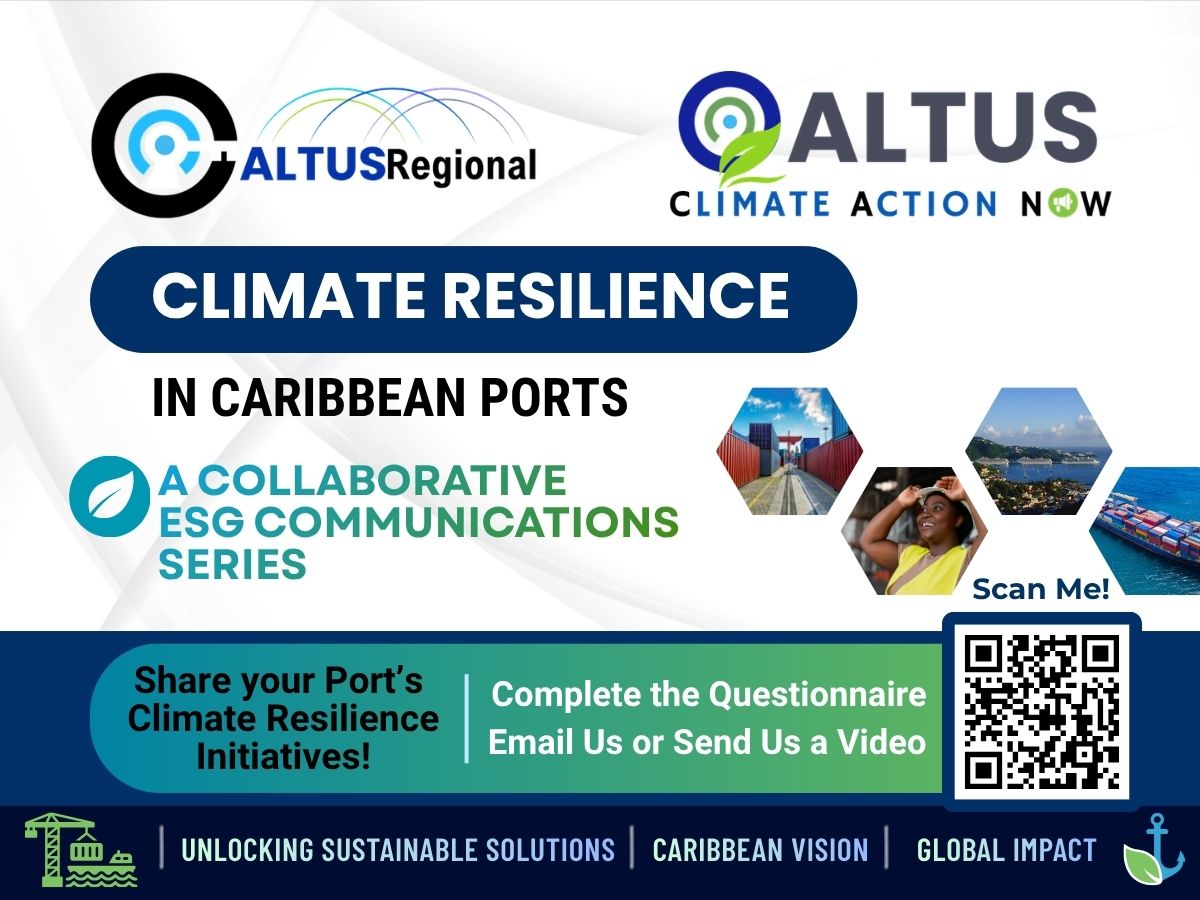
Altus Regional is conducting a study on Climate Resilience in Caribbean Ports. We invite Caribbean ports and maritime institutions to contribute to this regional effort by completing our short questionnaire. Your insights will help shape articles, knowledge products, and research outputs that highlight the leadership and resilience strategies emerging across the region.

Respond to the Questionnaire
Strengthening Regulatory Frameworks for Ecosystem Protection

Strengthening legislative protection requires a shift from reactive environmental regulation towards integrated national and sectoral planning frameworks capable of aligning marine protection objectives with long‑term economic and institutional priorities. Governments should adopt statutory frameworks that recognise coral reefs, mangroves and seagrass meadows as interconnected ecological assets providing nationally significant environmental and economic services. Such recognition would support a more holistic approach to decision-making while ensuring that conservation objectives are integrated into broader development planning.
 
Environmental Impact Assessment legislation should be strengthened by requiring cumulative impact assessments, climate resilience assessments and ecosystem service valuation for developments affecting coastal and marine environments. Rather than focusing solely on immediate environmental impacts, regulatory authorities should evaluate how proposed developments may affect ecosystem connectivity, biodiversity, carbon sequestration and long-term climate resilience.
 
Coastal development controls should similarly be modernised. Mandatory coastal setback requirements, restrictions on mangrove clearance and enhanced controls on dredging and land reclamation can significantly reduce habitat loss while improving long-term resilience to sea-level rise and storm surge. Governments should also introduce mandatory habitat restoration obligations requiring developers to rehabilitate degraded ecosystems where impacts cannot reasonably be avoided.
 
Marine Protected Areas (MPAs) remain one of the most widely used conservation tools, yet their effectiveness depends upon sound governance rather than designation alone. Legislation should establish clear management objectives, monitoring obligations, stakeholder participation mechanisms and sustainable financing arrangements to ensure protected areas deliver measurable ecological outcomes rather than existing solely on paper. Effective MPAs should also be integrated with broader Marine Spatial Planning (MSP) frameworks to ensure conservation objectives are balanced with sustainable economic development. By aligning ecological, economic and spatial data, marine spatial planning provides governments with a structured method for reducing sectoral fragmentation and improving long‑term ecosystem management. Recent regional MSP initiatives demonstrate how spatial governance tools can complement legislative reform by strengthening coordination across fisheries, tourism, and coastal zone management.
 
Technological innovation offers further opportunities to strengthen compliance. Satellite imagery, remote sensing, unmanned aerial systems and Geographic Information Systems (GIS) now enable regulators to monitor mangrove loss, coral bleaching, sedimentation and illegal activities with greater accuracy than traditional inspection methods. Integrating the legal and institutional capacity to apply digital tools for environmental monitoring and pollution detection within statutory and regulatory frameworks can significantly enhance enforcement capacity, while supporting more consistent, evidence-based environmental decision making.

Donor‑Supported Legislative Modernisation

While innovative financing mechanisms expand the resources available for ecosystem restoration, effective utilisation of these funds depends on the strength and coherence of underlying governance systems. Legislative frameworks drafted several decades ago often did not anticipate the scale or complexity of contemporary climate pressures, nor the technical requirements associated with modern environmental finance. As a result, many Caribbean jurisdictions are now working to update statutory instruments to ensure that financing mechanisms can be deployed effectively, transparently, and in alignment with long‑term conservation objectives.
 
Modernising ocean governance is a resource‑intensive undertaking requiring specialised legal expertise, sustained institutional coordination, and multi‑year financial support.  Strengthening legislative, policy, and institutional frameworks requires investment. The OECS–World Bank Unleashing the Blue Economy of the Caribbean (UBEC) programme demonstrates how targeted investments in regulatory harmonisation, institutional
capacity-building and development can support more coherent blue-economy governance across participating states.

Closing Legislative and Governance Gaps Through Integrated Regional Cooperation

The transboundary nature of marine ecosystems means that no Caribbean state can effectively protect its coastal resources in isolation. Ocean currents, migratory fish stocks, marine pollution and climate impacts routinely cross-national boundaries, making regional cooperation essential. Existing frameworks such as the Cartagena Convention, its Protocol Concerning Specially Protected Areas and Wildlife (SPAW), the Convention on Biological Diversity, the Paris Agreement and the Kunming–Montreal Global Biodiversity Framework provide important foundations for harmonised marine governance.

Regional organisations, including the Caribbean Community Climate Change Centre (CCCCC), the Caribbean Regional Fisheries Mechanism, the Organisation of Eastern Caribbean States (OECS), and CARICOM are increasingly supporting collaborative approaches to marine conservation, climate adaptation and blue economy development. Continued cooperation should focus on harmonising legislative standards, strengthening technical capacity, improving marine data sharing and promoting coordinated enforcement against activities such as illegal fishing and marine pollution.

The Caribbean’s future prosperity will depend significantly upon its ability to safeguard the natural systems that support its blue economy. UNEP’s Report on The Value of Seagrasses to the Environment and to People underscores that these marine ecosystems are not peripheral environmental assets but core systems that underpin food security, fisheries, tourism, biodiversity and climate resilience. Their degradation directly threatens national development trajectories. Taken together, these realities point to a single strategic imperative: regional cooperation and national action must be understood as mutually reinforcing, not competing, pathways. Effective marine protection in the Caribbean will require countries to strengthen their own governance systems while simultaneously deepening regional alignment. 

Request Our Services

Altus Regional provides research, analysis and technical support that help institutions understand and navigate regulatory obligations in marine and coastal protection. Explore our services or reach out to discuss how our expertise can support your environmental and blue economy initiatives.

Request a ProposalView Our Services

Our Services

Altus Regional is a multidisciplinary consulting firm delivering integrated advisory, technical, modernization, training, capacity‑building, and project‑delivery services across a wide range of sectors.

Research, Insights & Analytics

We deliver applied research and evidence‑based insights that help institutions resolve challenges and make informed decisions.

Regulatory Compliance

Regulatory Compliance services supporting regulated entities in meeting international standards and reporting obligations.

Market Entry Strategy

Structured market entry support helping international brands navigate the Caribbean’s multi‑jurisdictional frameworks with confidence.

Policy Development

We draft and develop policies, guidelines, rules, and standard operating procedures that translate mandates into practical directions.

Project Delivery

Remote or embedded consultant support providing structured coordination and oversight to ensure successful project execution.

Training & Capacity Building

Altus Regional delivers targeted training and capacity building aligned with sector requirements, regulatory frameworks, and operational needs.

Creative Design Solutions

Creative design solutions that help organisations of all sizes communicate with clarity, personality and purpose through thoughtful visual and digital design.

Legislative Drafting

Legislative drafting services supporting Caribbean Governments in updating and modernizing laws, regulations and statutory instruments.

Strategic Planning

Altus Regional provides strategic planning expertise that strengthens national, sectoral and organisational decision making.

Technical Services

Altus Regional provides technical services that support planning, delivery, and operational decision‑making across infrastructure, environmental systems, natural resources, and climate‑related initiatives.

Digital & Data Governance

We work alongside technical experts integrating laws, policies, and institutional mandates into digital and data‑driven solutions.

Marketing & Communications

Altus Regional delivers tailored marketing and communications solutions that strengthen institutional positioning and stakeholder trust across public, private, and regulated sectors.

Our Service Divisions

Our service divisions reflect specialised capability aligned with specific sectors, addressing the distinct needs and challenges of the industries we serve.


Unlocking Sustainable Solutions