
-
Marine Spatial Planning for Blue Economy Investment
- July 1, 2026
- Posted by: Amaya Emmanuel
- Categories: Blue Policy Series Insights, Maritime & Blue Economy
No Comments
This article explains how Marine Spatial Planning (MSP) is becoming a key digital governance approach for managing ocean space in the blue economy. It highlights how GIS-based tools are used to coordinate competing marine activities, reduce regulatory conflict, and support more sustainable and investment-ready ocean development through integrated, data-driven planning.
-
Strengthening Labour Standards for Workers in the Blue Economy
- June 30, 2026
- Posted by: Amaya Emmanuel
- Categories: Blue Policy Series Insights, Maritime & Blue Economy
This article explains how the Maritime Labour Convention (MLC, 2006) and the ILO Work in Fishing Convention (No. 188) establish international standards for decent work at sea, while also highlighting ongoing gaps in enforcement and implementation.
-
Marine Pollution Response and Waste Management Gaps in the Caribbean
- May 30, 2026
- Posted by: Amaya Emmanuel
- Categories: Blue Policy Series Insights, Maritime & Blue Economy
Ports and cruise terminals are increasingly exposed to rising sea levels, stronger storms, and coastal erosion, making outdated design standards no longer sufficient. Climate resilience must shift from optional guidance to mandatory rules embedded in design, maintenance, and investment frameworks. Without enforceable standards, critical maritime infrastructure risks becoming unsafe, uninsurable, and economically unsustainable over its lifespan.
-
Ports, Terminals and Coastal Infrastructure at the Frontline of a Changing Climate
- April 4, 2026
- Posted by: Amaya Emmanuel
- Categories: Blue Policy Series Insights, Maritime & Blue Economy
Climate resilience standards are essential for safeguarding ports, cruise terminals, and coastal infrastructure against rising sea levels, hurricanes, and extreme weather. By integrating global best practices, mandatory design requirements, and nature-based solutions, these standards strengthen maritime assets, protect tourism economies, and ensure supply chain continuity in vulnerable coastal regions.
-
Toward a Circular Blue Economy: Reducing Waste in Caribbean Maritime, Fisheries, and Coastal Tourism Industries
- March 7, 2026
- Posted by: Amaya Emmanuel
- Categories: Blue Policy Series Insights, Maritime & Blue Economy
Integrating the principles of a circular economy into Caribbean maritime operations, fisheries management, and sustainable tourism development practices.
-
Closing Legislative and Governance Gaps in Marine Ecosystem Protection Across the Caribbean
- February 23, 2026
- Posted by: Amaya Emmanuel
- Categories: Blue Policy Series Insights, Maritime & Blue Economy
Examines why modern, integrated laws and stronger institutional coordination are essential to safeguard marine ecosystems from accelerating environmental pressures.
-
Strengthening Coral Reef, Mangrove and Seagrass Protections in the Caribbean
- February 22, 2026
- Posted by: Amaya Emmanuel
- Categories: Blue Policy Series Insights, Maritime & Blue Economy
Analysis of emerging threats to coral reefs, mangroves and seagrass meadows in the Caribbean and the governance reforms needed to strengthen coastal ecosystem protections.
-
Climate-Risk Disclosure for Maritime and Coastal Assets
- January 14, 2026
- Posted by: Amaya Emmanuel
- Categories: Blue Policy Series Insights, Maritime & Blue Economy
Climate‑risk disclosure is becoming strategically unavoidable for Caribbean ports. This article explains how TCFD, ISSB and emerging UK/EU standards shape expectations and outlines a proportionate, region‑appropriate pathway for credible climate‑risk reporting, supported by recent Caribbean initiatives.
-
Overview of UK Sanctions
- December 4, 2025
- Posted by: Amaya Emmanuel
- Category: AML Compliance Insights
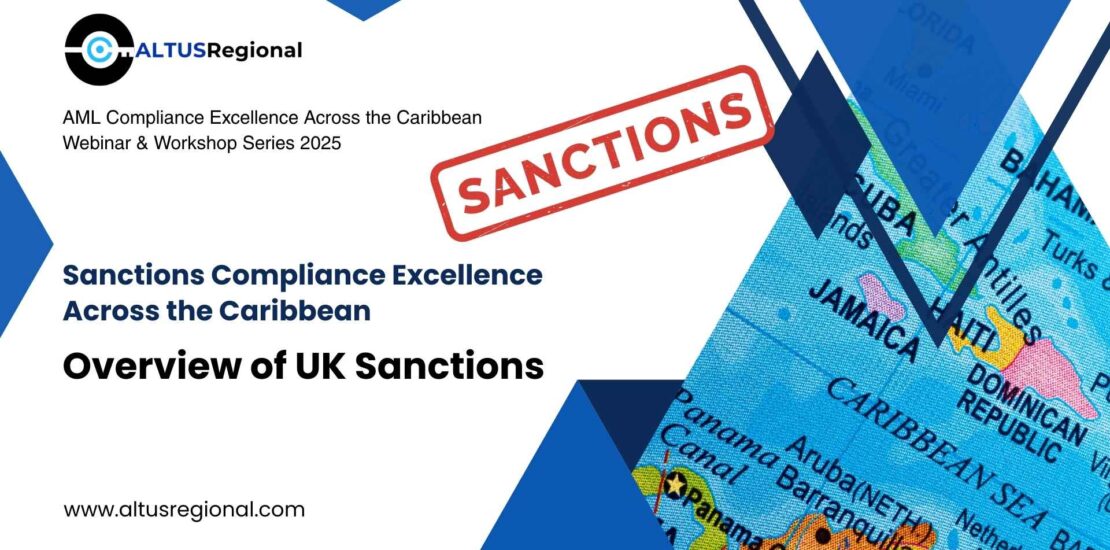
The foundation of the UK sanctions regime is the Sanctions and Anti-Money Laundering Act 2018 (SAMLA). SAMLA grants powers to the UK Government, particularly the Secretary of State for Foreign, Commonwealth and Development Affairs (FCDO) and the HM Treasury, to make regulations imposing: trade sanctions, financial sanctions, immigration restrictions and transport and shipping controls.