Caribbean Maritime Sector Gender Equality Mapping 2026Altus Regional Launches Gender Equality Mapping Exercise

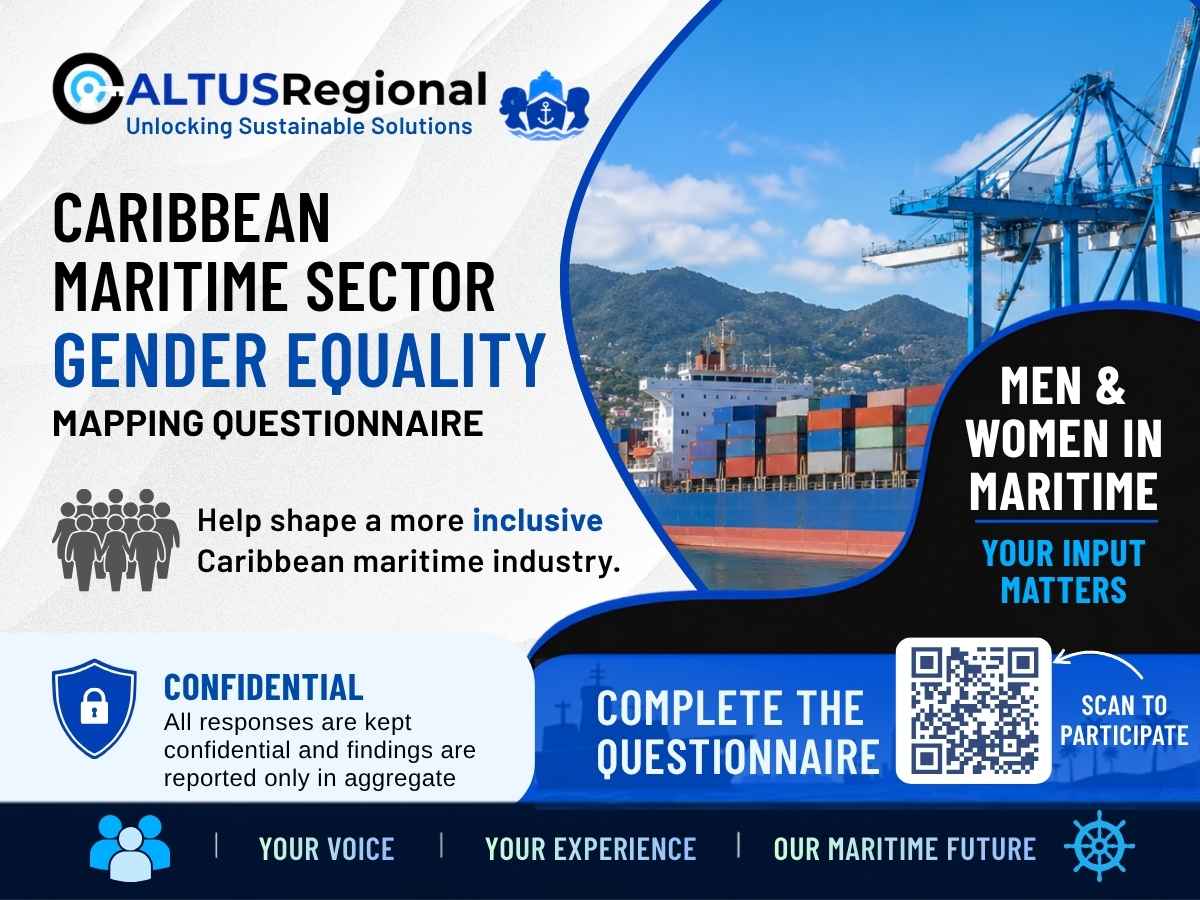
The Caribbean Maritime Sector Gender Equality Mapping is an annual initiative conducted by Altus Regional Consulting Solutions (Caribbean) Ltd. to examine how maritime organizations across the region are advancing gender equality through policy, governance, workforce practices, institutional systems, leadership structures, and implementation mechanisms.
 
The initiative provides a structured evidence base to support informed decision-making, strengthen institutional capacity, identify implementation challenges, and monitor progress over time. Through annual survey cycles, the programme seeks to establish a longitudinal understanding of gender equality implementation across the Caribbean maritime sector and contribute to practical, evidence-informed solutions. Findings from the Mapping Exercises will directly inform the development of articles, guidance materials, and other knowledge products within the Policy to Practice series, grounding the framework in regional data and institutional realities.

Annual Survey Programme

The Caribbean Maritime Sector Gender Equality Mapping is conducted annually. Each survey cycle contributes to a growing regional evidence base that supports longitudinal analysis and enables stakeholders to monitor progress over time. Successive surveys will provide insights into emerging priorities, implementation challenges, institutional developments, and evolving sector trends. Future survey cycles will be announced and made available through this page.

Complete the Gender Mapping Survey
About the Initiative

Across the Caribbean maritime sector, organizations are making commitments to greater inclusion, equal opportunity, workforce development, and institutional strengthening. Translating these commitments into sustained action requires an understanding of the policies, systems, resources, accountability mechanisms, and organizational practices that support implementation.
 
The initiative examines institutional readiness and implementation pathways across maritime administrations, port authorities, shipping and logistics companies, maritime training institutions, service providers, industry associations, and other maritime stakeholders operating throughout the region.
 
By collecting and analysing annual data, the programme supports the development of practical knowledge products, implementation guidance, and evidence-based recommendations that help organizations move from policy commitments to measurable outcomes.
 
Effective gender equality implementation extends beyond the adoption of policies. Sustainable progress depends upon the systems and institutional arrangements that enable organizations to translate commitments into practice.
 
The Mapping Initiative explores key implementation dimensions, including:

Governance and leadership
Gender equality policies and procedures
Workforce representation and participation
Data collection and monitoring systems
Capacity building and training
Accountability and reporting mechanisms
Organizational culture and inclusion
Institutional readiness for implementation

The resulting evidence provides insights into both current conditions and emerging trends across the sector.

From Policy to Practice

The initiative supports a broader understanding of implementation by examining the pathway through which organizational commitments become operational outcomes.

Commitment → Policy → Systems → Implementation → Monitoring → Continuous Improvement

This progression reflects the practical reality that achieving meaningful gender equality requires more than policy adoption alone. Effective implementation depends on the systems, resources, accountability structures, and leadership support necessary to sustain progress over time.

2026 Baseline Survey

The 2026 survey cycle established the baseline dataset for the Caribbean Maritime Sector Gender Equality Mapping programme. As the inaugural survey cycle, the 2026 exercise provides an important reference point against which future annual results may be assessed, compared, and evaluated.

Insight 1 — Gender Representation Across Roles As at 25 June 2026

Early responses indicate that women and men are distributed unevenly across maritime roles, with higher representation in administrative and training functions and lower representation in technical, operational, and seafaring positions. These initial patterns reflect the current gender composition of the responding organisations and will continue to evolve as more data are submitted.

Insight 2 — Policy and Institutional Frameworks As at 25 June 2026

Early responses indicate that many maritime institutions operate without a formal gender equality policy. Among those with a policy, respondents reported on whether key components are present, including review cycles, designated responsibility, tracking mechanisms, budget allocation, and whether the policy has contributed to observable changes in behaviour. These responses provide an early snapshot of how gender equality commitments are structured across institutions.

Insight 3 — Systems and Capacity for Implementation As at 25 June 2026

Respondents have begun reporting on the systems their organisations currently use to support gender equality, including training, reporting pathways, data collection, and monitoring mechanisms. Early results indicate few institutions maintain gender‑disaggregated workforce data or conduct regular assessments of equality outcomes.

Moving Towards Compliance Excellence

AltusComply

AltusRegional Compliance Tools & Resources

Read More

AltusLDP

AltusRegional Learning & Development Portal

Enter here

AltusInsights

AltusRegional Insights, Trends & Research Findings

Read More

Upcoming Events Learning Events, Training & Capacity Building Initiatives, and Thought Leadership

Gain insights on industry trends, register for our upcoming webinars and workshops, and follow our thought leadership platforms.

Thought Leadership

Our Service Divisions

Our service divisions reflect specialised capability aligned with specific sectors, addressing the distinct needs and challenges of the industries we serve.


Unlocking Sustainable Solutions