
Digital Tools Transforming Environmental Monitoring and Pollution Detection in the Caribbean
Digital systems are revolutionizing environmental monitoring in the Caribbean, where vulnerable island ecosystems face intensifying threats from marine pollution, coastal erosion, and climate variability. By integrating water-quality sensors, shoreline platforms, environmental dashboards, and early-warning systems, these tools strengthen detection capabilities, enable proactive coastal-zone management, and align with key Sustainable Development Goals (SDGs) such as SDG 6 (Clean Water and Sanitation), SDG 14 (Life Below Water), and SDG 13 (Climate Action).
Climate Resilience Exercise
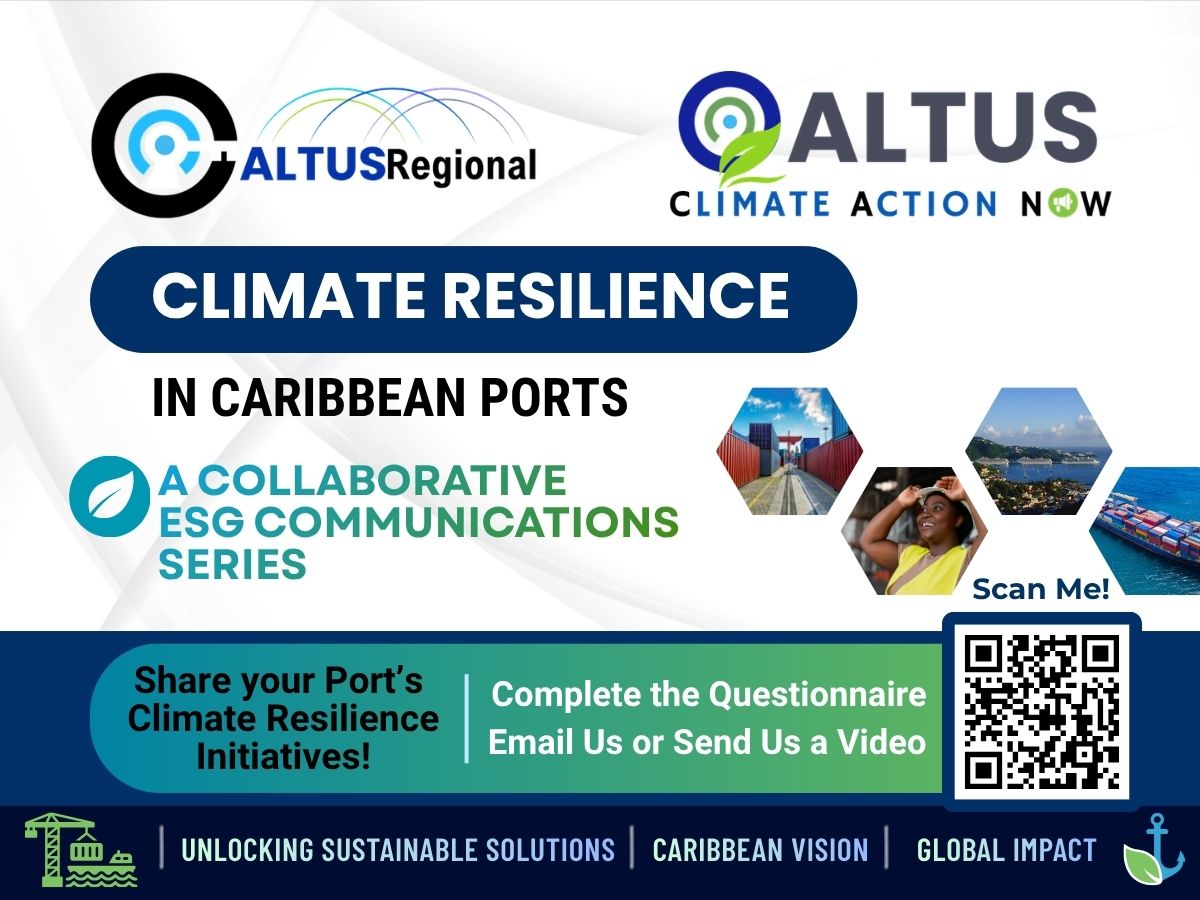
Altus Regional, in collaboration with Altus Climate Action Now Inc., invites ports across the Caribbean to showcase the projects, programmes, and initiatives they are leading to strengthen climate resilience, protect marine and coastal environments, and advance sustainable port development. By sharing your experiences and best practices through our Climate Resilience in Ports questionnaire, you will help highlight regional leadership, encourage knowledge exchange, and inspire practical solutions that support a more resilient and sustainable maritime sector.
Respond to the Questionnaire
Strengthening Monitoring with Digital Platforms Centralizing Data Through Regional Portals
Digital platforms centralize fragmented data into intuitive dashboards, transforming how Caribbean nations track environmental health. The Regional Environmental Monitoring Data Portal (REMDAP), launched by the OECS Commission, aggregates GIS-based ecosystem and natural resource data from eight countries, enabling visualization of pollution trends, biodiversity shifts, and land-use changes in real time.
UNEP’s GRID Regional Platform complements this with tools like MapX for geospatial analysis of marine pollution and biodiversity, supporting “State of the Marine Environment” reports that inform regional policy. Additional dashboards, such as the Caribbean Protection Dashboard for ocean and mangrove statistics, CARICOM’s CARMES for resilience tracking, and the Caribbean Protected Areas Gateway as a biodiversity hub, provide accessible metrics that foster cross-border collaboration and decision-making.
Enhancing Pollution Detection via Sensors
Proactive Coastal-Zone Management
Institutional Benefits and Future Outlook
Request Advisory Support
Institutions seeking to strengthen cold chain effectiveness and reduce operational and regulatory risk may request a tailored advisory proposal from Altus Regional Consulting Solutions.
Discover How We Can HelpReferences:
The CARICOM Monitoring, Evaluation and Reporting Systems
https://unepgrid.ch/activity/ij5lpj
https://experience.arcgis.com/experience/374273e631e0487ba94ba9bf581b632b
https://caribbeanprotectedareasgateway.org/
Caribbean 2.0
Sustainable Data Collection: Climate Monitoring in the Caribbean
https://ccoral.caribbeanclimate.org/useful-links/relevant-agencies
https://wmo.int/media/project-update/strengthening-early-warning-communication-systems-across-caribbean
https://files.acquia.undp.org/public/migration/latinamerica/Early_Warning_Systems_in_the_Caribbean_A_Desk_Review_EN.pdf
https://documents1.worldbank.org/curated/en/482391554225185720/pdf/Marine-Pollution-in-the-Caribbean-Not-a-Minute-to-Waste.pdf
https://www.unep.org/cep/what-we-do/projects
https://www.stvincenttimes.com/guyana-first-in-caribbean-to-monitor-environmental-changes-in-real-time/
New technology to detect sea pollution
Recent Posts
Smart Ports for Zero‑Waste Operations
Digital Innovation in Oil Spill Detection in the Caribbean
Cruise Industry: Passenger Flows and Port Operations
Thought Leadership
Our Services
Altus Regional is a multidisciplinary consulting firm delivering integrated advisory, technical, modernization, training, capacity‑building, and project‑delivery services across a wide range of sectors.
Research, Insights & Analytics
We deliver applied research and evidence‑based insights that help institutions resolve challenges and make informed decisions.
Regulatory Compliance
Regulatory Compliance services supporting regulated entities in meeting international standards and reporting obligations.
Market Entry Strategy
Structured market entry support helping international brands navigate the Caribbean’s multi‑jurisdictional frameworks with confidence.
Policy Development
We draft and develop policies, guidelines, rules, and standard operating procedures that translate mandates into practical directions.
Project Delivery
Remote or embedded consultant support providing structured coordination and oversight to ensure successful project execution.
Training & Capacity Building
Altus Regional delivers targeted training and capacity building aligned with sector requirements, regulatory frameworks, and operational needs.
Creative Design Solutions
Creative design solutions that help organisations of all sizes communicate with clarity, personality and purpose through thoughtful visual and digital design.
Legislative Drafting
Legislative drafting services supporting Caribbean Governments in updating and modernizing laws, regulations and statutory instruments.
Strategic Planning
Altus Regional provides strategic planning expertise that strengthens national, sectoral and organisational decision making.
Technical Services
Altus Regional provides technical services that support planning, delivery, and operational decision‑making across infrastructure, environmental systems, natural resources, and climate‑related initiatives.
Digital & Data Governance
We work alongside technical experts integrating laws, policies, and institutional mandates into digital and data‑driven solutions.
Marketing & Communications
Altus Regional delivers tailored marketing and communications solutions that strengthen institutional positioning and stakeholder trust across public, private, and regulated sectors.
Our Service Divisions
Our service divisions reflect specialised capability aligned with specific sectors, addressing the distinct needs and challenges of the industries we serve.