
Digital Transformation Trends in the Maritime Sector Series Calendar
Altus Regional’s Digital Transformation Trends in the Maritime Sector Series 2026 is a year‑long content and learning initiative exploring how digital tools, systems, and operational technologies are being applied across the maritime sector.
The digital transformation trends series is structured around monthly focus areas, each examining practical applications, emerging trends, and operational considerations relevant to ports, terminals, logistics operators, and maritime stakeholders.
Climate Resilience
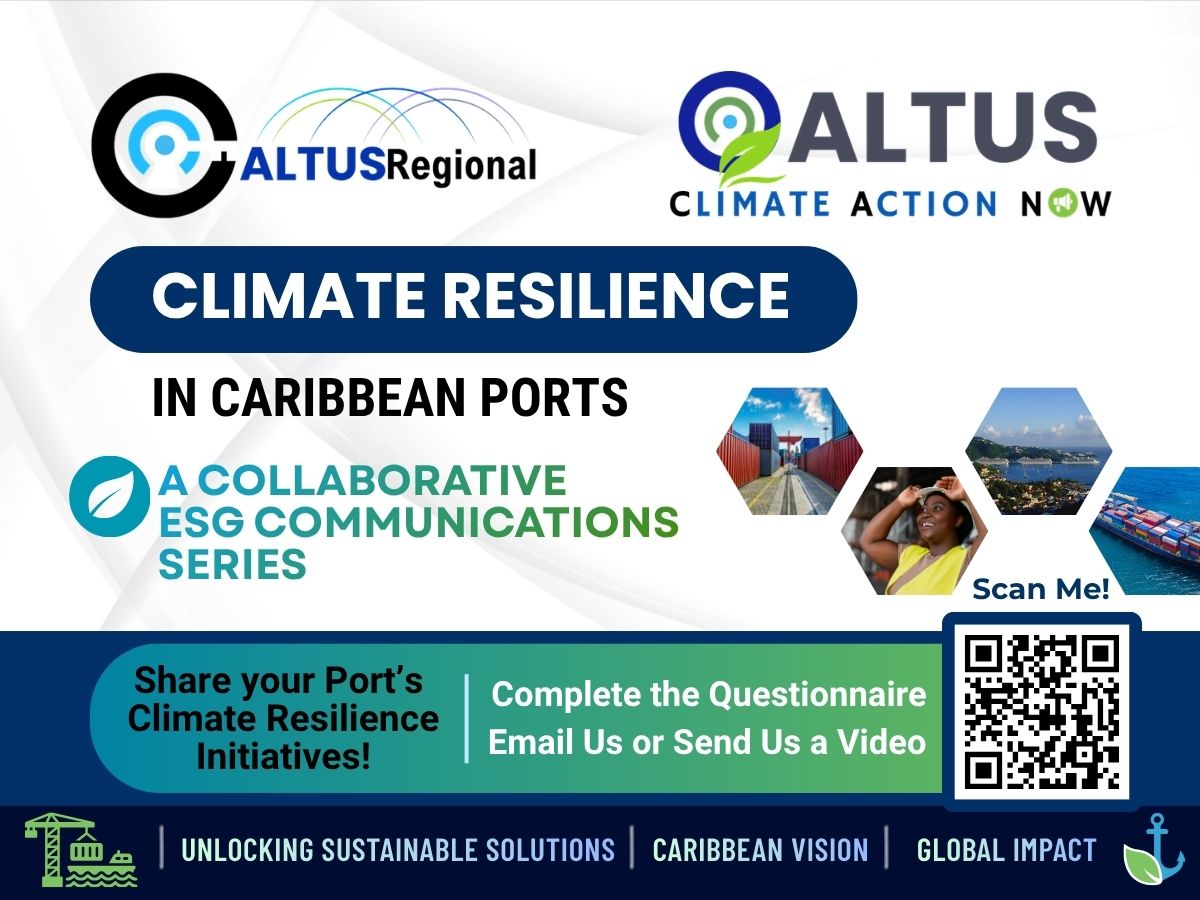
Altus Regional in collaboration with Altus Climate Action Now is documenting how ports are modernising infrastructure, strengthening operational continuity, and adopting digital technologies to manage evolving climate risks. We invite port leaders to contribute to this regional effort by sharing insights through our Climate Resilience in Caribbean Ports Form.
Questionnaire
Short‑form video content exploring how digital tools and technologies are being applied across ports, terminals, logistics, and maritime operations. Videos highlight practical use cases, emerging trends, and operational considerations drawn from real‑world contexts.
Written articles examining digital transformation trends shaping the maritime sector. Insights focus on practical applications, implementation considerations, and lessons relevant to ports, logistics operators, and maritime stakeholders at different stages of digital readiness.
Practical digital tools, frameworks, and reference materials supporting implementation and decision‑making. Resources are selected to help organisations assess options, understand requirements, and navigate digital transformation initiatives more effectively.
Tab Content
Digital Transformation Trends in the Maritime Sector 2026 CALENDAR
-
JANUARY - Digital Transformation in Ports & Logistics
This kickoff article explores how digital transformation is modernizing Caribbean ports and logistics, improving efficiency, visibility, and regional trade resilience.
-
IoT, Smart Sensors and Cold‑Chain Monitoring
Real‑time cargo tracking and temperature monitoring for perishables: sensor setups, alerts, and how data is shared with carriers, forwarders and customs.
-
FEBRUARY - Cruise Industry: Passenger Flows and Port Operations
Digital tools to speed cruise turnarounds and improve passenger experience: berth scheduling, passenger check‑in flows, baggage handling, shore‑side logistics and health/safety coordination with ports.
-
MARCH - Smart Ports for Zero‑Waste Operations
This topic explores how smart-port technologies support zero-waste goals by optimising cargo flows, reducing waste at the source, and improving resource efficiency. A bonus article also examines how digital innovation is enhancing oil spill detection and response across the region.
-
Digital Innovation in Oil Spill Detection in the Caribbean
Emerging digital technologies are reshaping how oil spills are detected and managed across the Caribbean. From satellite monitoring and drones to AI-powered analytics, these tools are helping authorities respond faster, reduce environmental damage, and strengthen regional preparedness.
-
April - Digital Trade Documentation and Single Window
Moving from paper to e‑Bills of Lading and e‑manifests, and how single‑window platforms reduce duplicate filings, speed customs clearance, and create more seamless interactions across maritime supply chains.
-
Key Insights from the CIP-OAS Webinar on Ports and Communities
Discover how ports and communities can build sustainable relationships that foster economic growth and well-being. In a recent webinar hosted by the Inter-American Committee on Ports (CIP-OAS), experts from Manta Port Terminal, Haina International Terminals, and Port of Antofagasta shared strategies for integrating port operations with community needs.
-
May - Port Resilience and Climate Adaptation Tech
Practical tech and planning that help ports withstand storms, sea‑level rise and extreme weather. This segment looks at climate‑adaptation technologies that help anticipate environmental risks and strengthen resilience planning, such as early warning systems, resilient infrastructure planning, and operational continuity tools.
-
JUNE- Digital Systems Transforming Environmental Monitoring & Pollution Detection
This topic explores how digital systems can strengthen environmental monitoring, improve pollution detection, and support more proactive coastal‑zone management. We look at emerging tools such as water‑quality sensors, shoreline monitoring platforms, environmental dashboards, and early‑warning systems that help institutions better understand and respond to environmental change.
-
July - AI and Predictive Maintenance
How AI‑driven analytics plus sensor data can predict failures for cranes, trucks and vessel systems so operators can schedule maintenance before breakdowns, anticipate equipment failures, and avoid costly downtime, while extending asset life and improving operational reliability.
-
August - Operational Dashboards and Digital Twins
Using operational dashboards and pilot digital‑twin models to visualize yard, berth and route scenarios, test changes before implementation, enable scenario planning, and measure KPIs.
-
September - Smart Tourism, CRM & Visitor Experience
Combining CRM systems and chatbots to manage bookings, enquiries and complaints; practical examples that improve passenger experience.
-
October - Drones and Autonomous Inspections
Practical pilots for yard surveys, hull inspections and security checks that speed inspections, reduce manual risk and shorten vessel turnaround times.
-
November - Fisheries and Sectoral Logistics
Tech solutions for fisheries supply chains: traceability, cold‑chain for catch, faster inspection workflows and export readiness to support livelihoods and food systems.
-
December - Cybersecurity and Data Protection
Simple, practical steps to protect freight‑visibility systems, customs interfaces and commercial data; ransomware contingency planning and supplier risk controls.
Recent Posts
Smart Ports for Zero‑Waste Operations
Digital Innovation in Oil Spill Detection in the Caribbean
Cruise Industry: Passenger Flows and Port Operations
Thought Leadership
Need Policy Development or Implementation Support?
Altus Regional develops plans, policies, and procedures for private and public sector use. Our capabilities extend to drafting legislative and regulatory instruments. Submit your request and our team will reach out with a tailored proposal.
Our Service Divisions
Our service divisions reflect specialised capability aligned with specific sectors, addressing the distinct needs and challenges of the industries we serve.